When an air conditioner runs but the house never gets comfortable, the cause is not always obvious. For San Jose homeowners, an AC not cooling can point to restricted airflow, an electrical problem, a refrigeration issue, a drainage failure, or several conditions happening at once.
During a recent residential service call in the San Jose area, an IRBIS HVAC technician completed a whole-system diagnostic, documented the equipment, and gave the homeowner multiple repair options. The selected repair included a new flood-prevention sensor designed to shut the system down if condensate starts backing up.
This real service visit shows what a professional San Jose HVAC diagnostic should investigate before anyone recommends a repair.
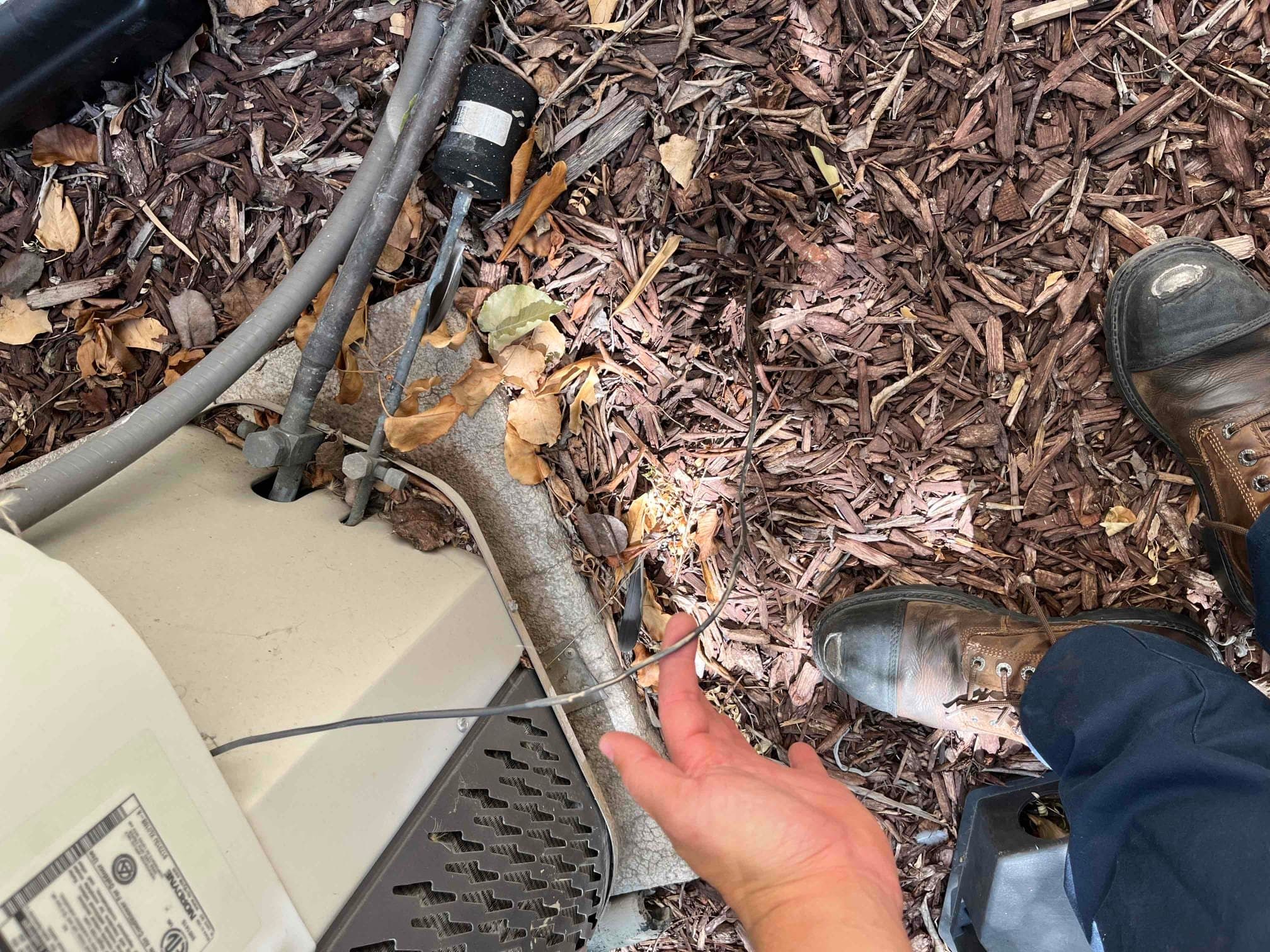
The indoor air handler and outdoor condenser operate as one system. A problem on either side can reduce cooling, which is why a dependable diagnosis goes beyond checking the thermostat or adding refrigerant.
During this visit, the technician documented the indoor equipment, outdoor condenser, evaporator coil, blower assembly, thermostat, filter, electrical components, supply-air temperature, and refrigerant-system operation.
A complete inspection helps distinguish the symptom—warm rooms or weak cooling—from the condition causing it.
Your air conditioner must move enough indoor air across the evaporator coil to absorb heat. A loaded filter, obstructed coil, blower problem, closed register, or duct restriction can reduce cooling even while the equipment continues to run.
Common signs of an airflow problem include:
Changing the filter is a sensible homeowner check. If the AC still is not cooling, however, running it continuously may make the problem worse. A technician should evaluate airflow before drawing conclusions about refrigerant or major equipment.
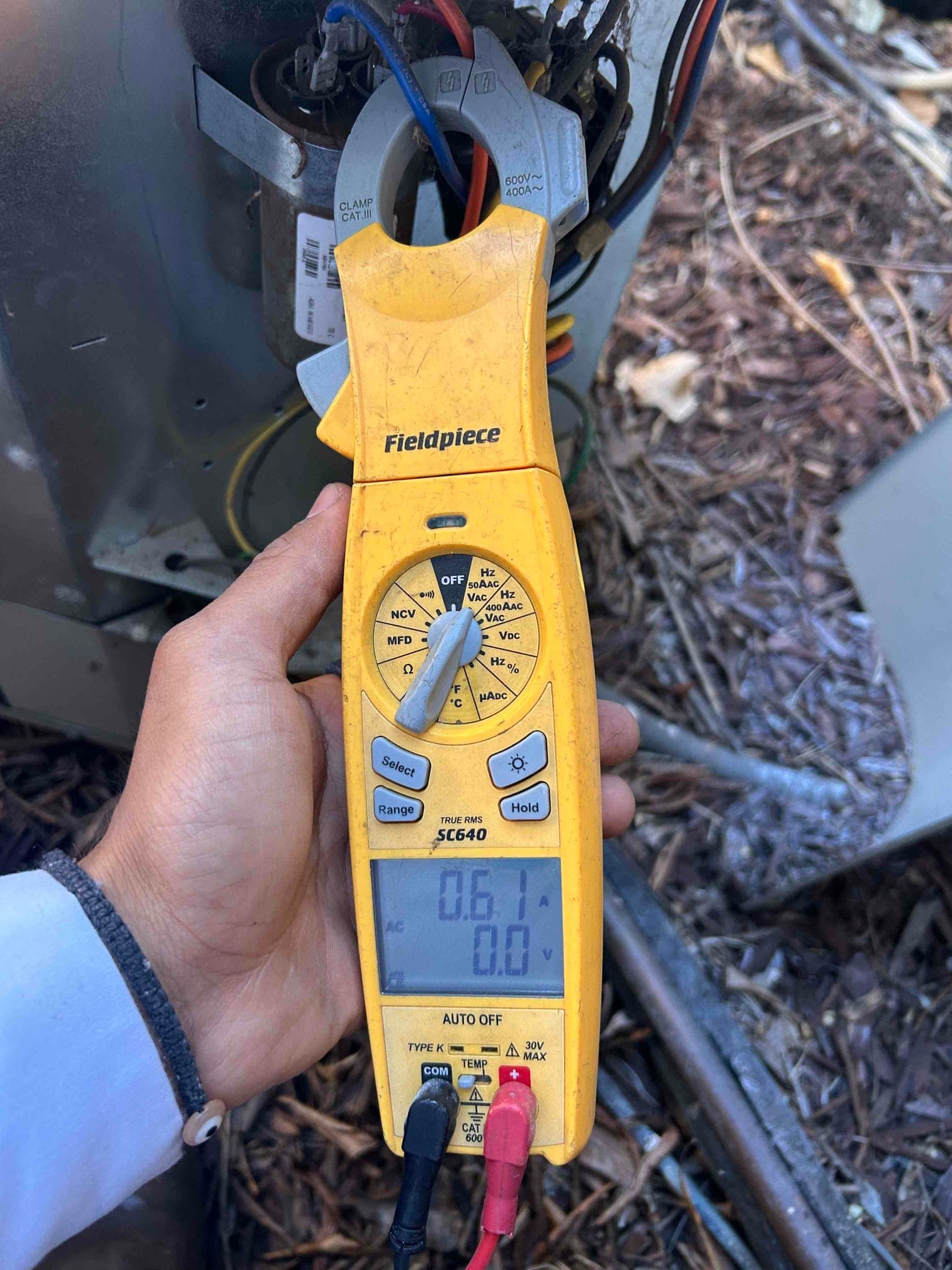
HVAC components can look normal while operating outside their intended electrical range. Professional meters allow a technician to check voltage, amperage, capacitors, motors, and control circuits instead of relying on guesswork.
At the outdoor unit, the IRBIS technician recorded electrical measurements while the equipment was operating. Those readings help determine whether the fan motor and compressor are starting and running correctly and whether a component is drawing an unusual amount of current.
Homeowners should not open HVAC electrical compartments themselves. Air-conditioning equipment contains high-voltage components, and capacitors may retain a charge after power has been disconnected.
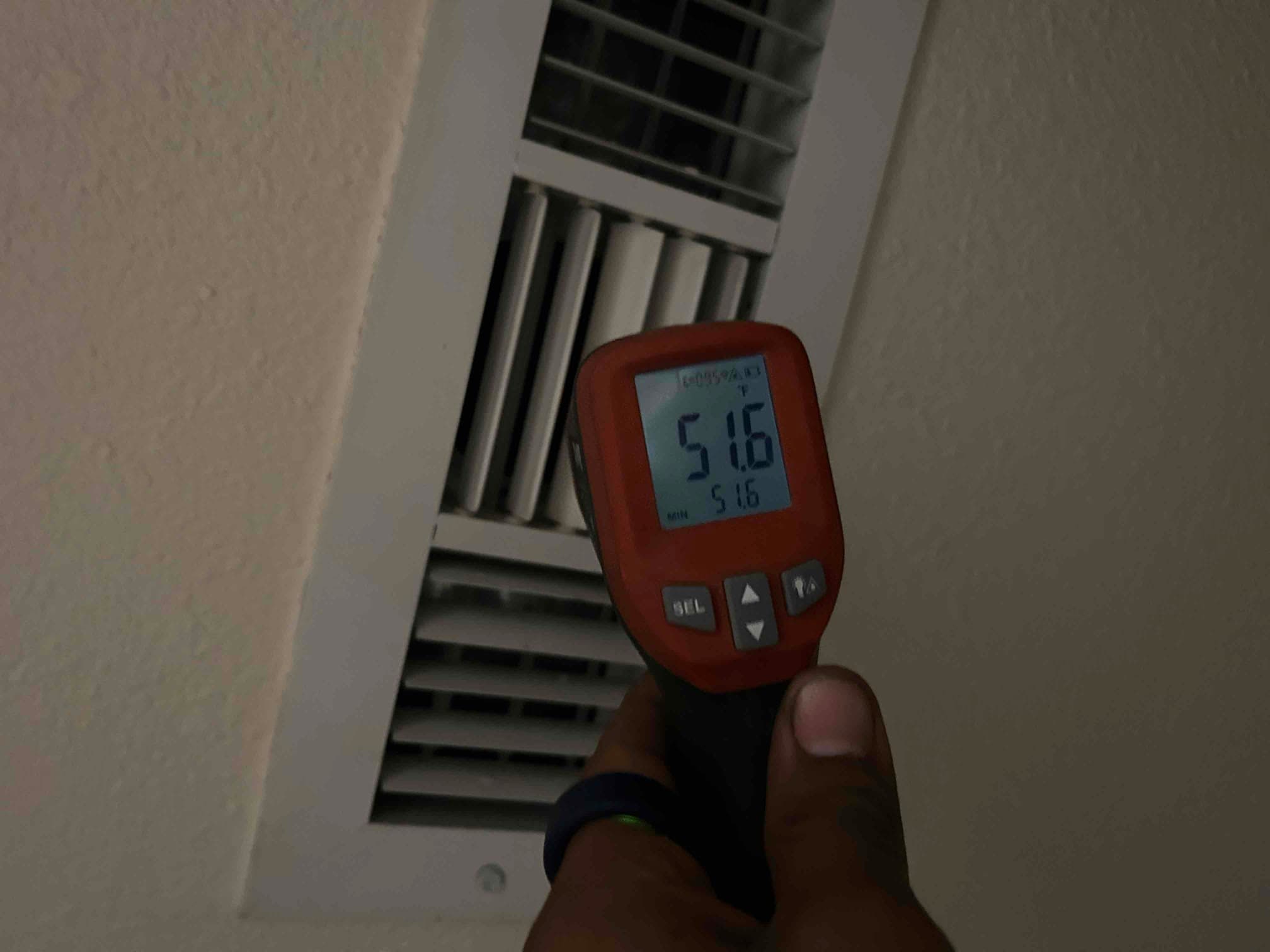
A technician may compare return-air and supply-air temperatures to see how much heat the system is removing from the indoor air. The result is useful, but it is not a diagnosis by itself.
The reading must be considered alongside indoor humidity, airflow, refrigerant conditions, equipment configuration, and how long the system has been operating. This is why a quick temperature check at one vent cannot replace a complete AC diagnostic.
Air conditioners do more than lower temperature: they also remove moisture from indoor air. That moisture collects at the indoor coil and leaves through a condensate drain.
If algae, dust, or debris restricts the drain, water can back up around the air handler. Depending on the installation, an overflow may damage drywall, flooring, cabinetry, insulation, or nearby electrical components.
For this service call, the chosen repair included replacement of a flood-prevention sensor, also known as a condensate safety switch or AC float switch. When rising water activates the switch, it interrupts cooling before the drain pan can overflow.
An unexpected shutdown is inconvenient, but it may be the safety control doing exactly what it was designed to do: stopping the system before a drainage problem becomes water damage.
Common causes include:
Resetting the equipment without addressing the drainage problem can allow water to overflow. The drain and safety controls should be inspected before the system is returned to regular operation.
After completing the diagnostic, the technician presented three levels of recommendations. They ranged from an immediate repair to broader preventive improvements involving drainage, coil care, and indoor air quality.
The homeowner chose the immediate repair option, which included the flood-prevention sensor and a repair warranty. Offering clear options lets the homeowner decide whether to correct the immediate problem or combine the repair with additional preventive work.
No customer name, address, neighborhood, job number, or equipment serial number is included in this case study.
These questions create a more reliable path to repair than replacing parts based on symptoms alone.
Schedule professional AC service if you notice warm or weak airflow, repeated short cycling, water near the indoor unit, ice on refrigerant lines, unusual electrical sounds, or rooms that no longer reach the thermostat setting.
Turn the equipment off promptly if you see water or ice or notice a burning odor. Continuing to run the system can increase the extent of the damage.
IRBIS HVAC is centered in San Jose and serves communities across Santa Clara County, as well as portions of Alameda and San Mateo counties. Its service area includes San Jose, Santa Clara, Campbell, Cupertino, Los Gatos, Milpitas, Mountain View, Sunnyvale, Palo Alto, Fremont, Redwood City, and other nearby communities.
If your AC is not cooling—or it keeps shutting down because of a condensate problem—check the IRBIS HVAC service area and schedule professional help.